
Materials and Studio Basics

Materials are entirely the matter of preference and budget. Some of these things maybe too expensive for a beginner (and not necessary for study/practice), so use your own judgement and budget. Materials do affect the final look of the painting, especially the surface preparation. For study pieces this is not critical, but for important works - very much so. I advise to learn and experiment with different types of gesso and primers and learn to stretch and prime your own canvas.
Paint:
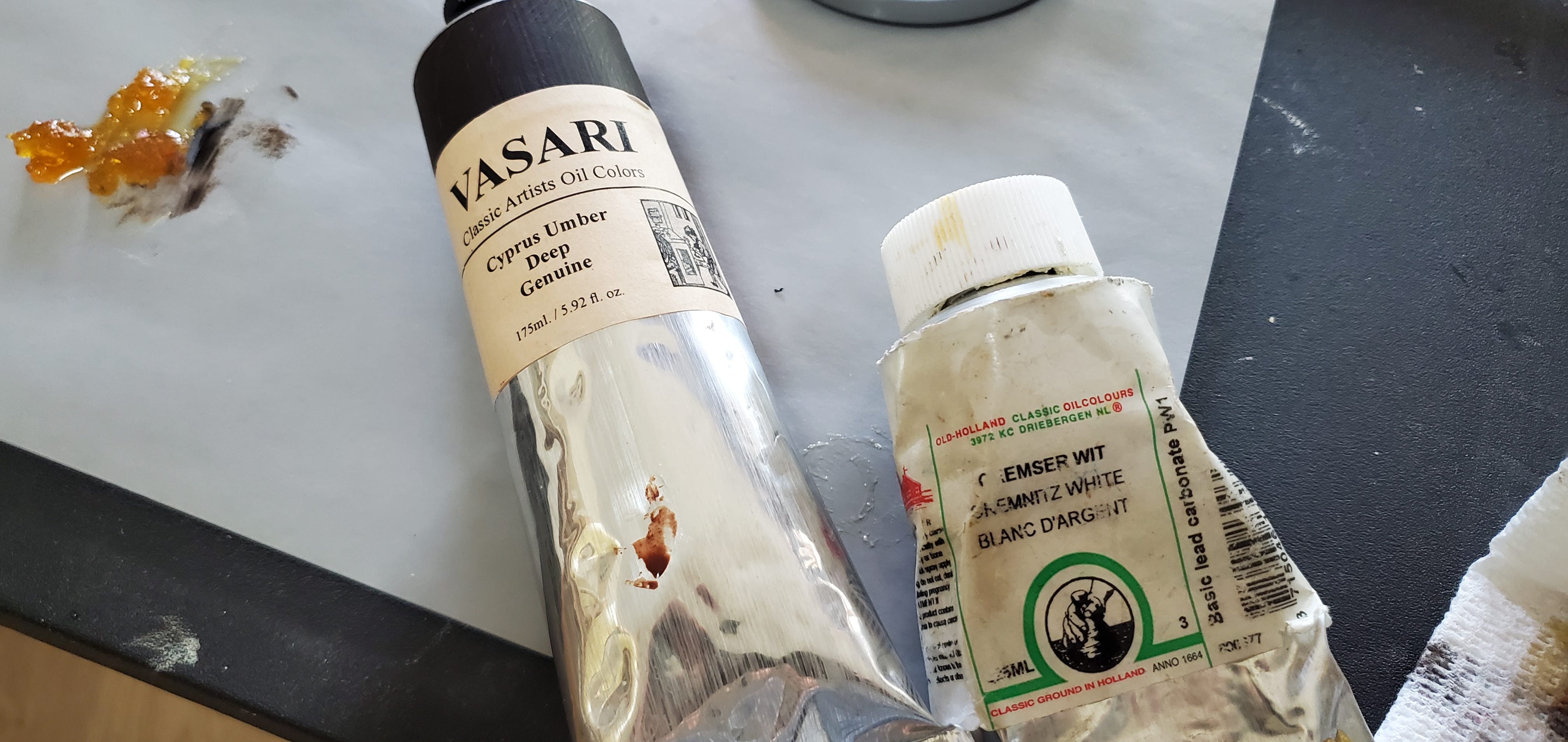
I use Vasari brand oil paint. It is expensive as it is hand made using traditional techniques and genuine raw materials, especially high chroma cadmiums and other metals. There are no fillers in this paint unlike in cheaper brands, so the chroma is very intense. That also makes expensive colors last very long (one small tube of cad red will last 2-3 years!) so I find the cost worth it. I rely heavily on earth colors (inexpensive) and buy large tubes of the ones I use most often. This paint is very fluid, requires almost no medium, and it is a plus for my style of painting.
White paint:
I paint almost exclusively with lead white. It is expensive - a large tube pictured here is about $100-$150. The reason for this is lead white is the best oil paint: it is extremely stable and makes paintings last for centuries. It has larger particle size than titanium and this makes it more translucent and less prone to milkiness and cloudiness. It also does not kill colors as much as titanium does, so it is easier to maintain chroma. Finally it is easy to sculpt it and make very attractive impasto brush strokes. Different brands have different properties for lead white. I use three - Vasari (most transparent), Holbein - more opaque than Vasari, and I use it most of the time, and Rublev #2 (in walnut oil) - this one is very stringy and great for impasto. Sometimes manufacturers use different names for lead white - cremnitz or flake white.
Brushes:
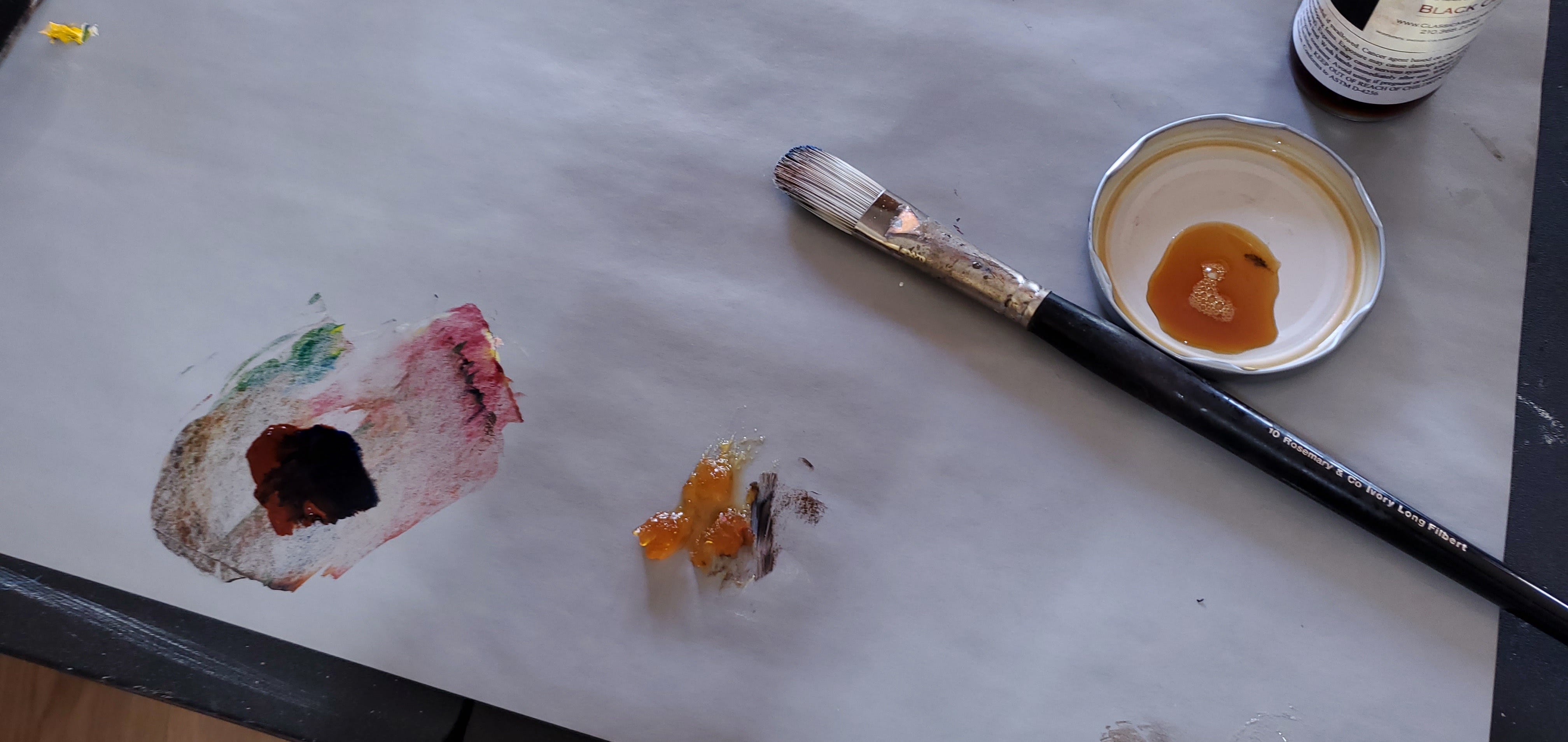
I use Trekell hog bristle and synthetic (opal synthetic) - both are very high quality and last quite a long time, especially the synthetics. I also have some Rosemary brushes.
Medium:
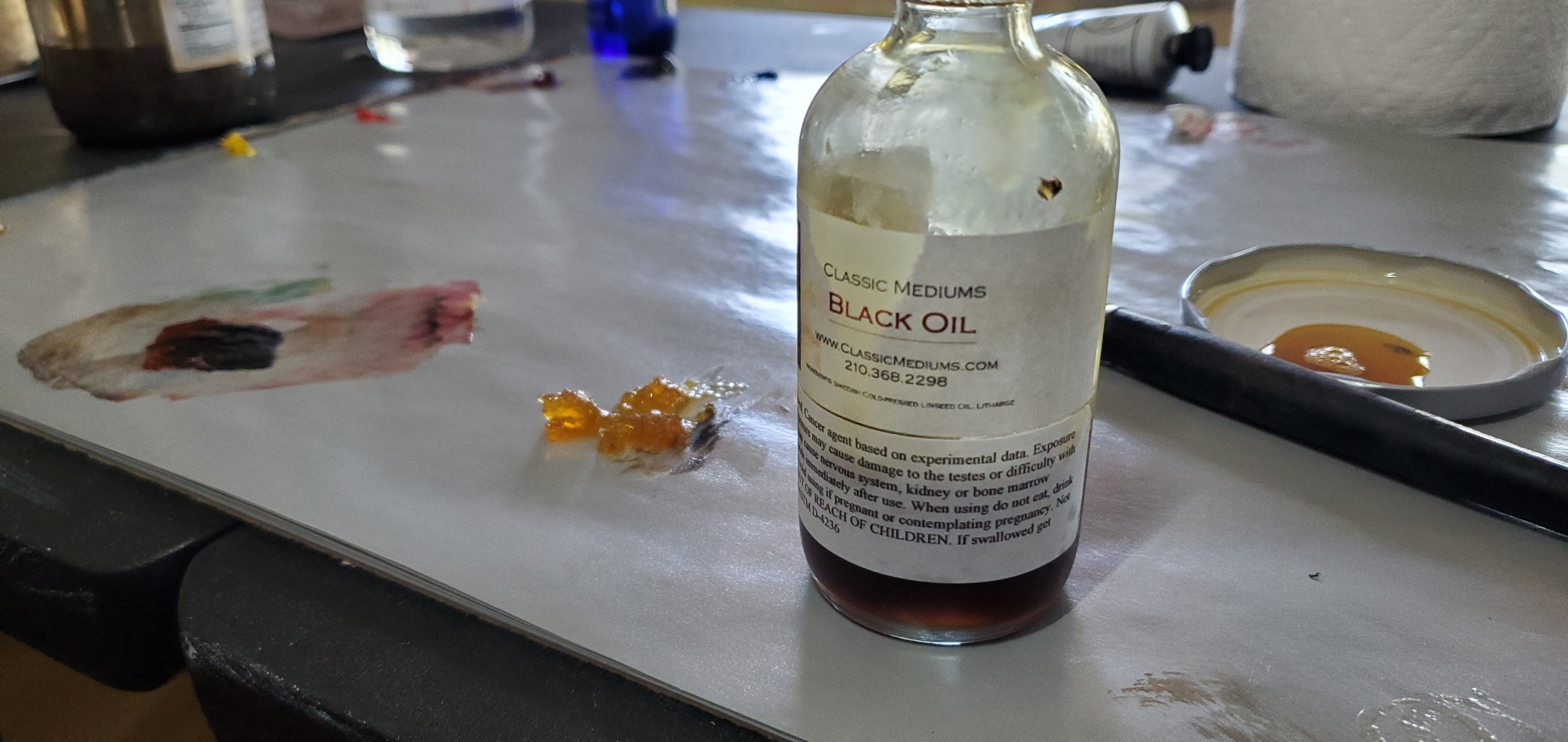
Classic Mediums makes excellent old masters maroger, Italian vax medium and black oil. All of them have lead in it. Black oil can be used straight or mixed with mineral spirits like Gamsol. Note: Classic Mediums recently changed ownership, and the maroger I bought from the new owners was extremely bad, I am trying to find another solution, I can’t recommend their maroger right now, but black oil is fine.
Palette:
Paper gray palette or tempered glass grey palette.
Varnish:
I use synthetic Gamvar gloss. The manufacturer states that it can be used soon after painting as opposed to waiting 6 months to varnish with traditional damar. I still prefer to wait as long as possible before varnishing.
Studio safety:
DO NOT eat in the studio! Even if you are not using lead or real cadmiums, there are plenty things that are toxic. Titanium is not really safe either. Keep kids and curious pets out. My dogs interfere in my videos but are not interested in the smelly paint.
DO NOT wash brushes or you are pouring this stuff into the water supply. I almost never wash my brushes. I keep them in a jar with linseed, or walnut, or safflower oil (use only these 3). Find whichever is cheaper. Walnut and safflower oil can be bought in a grocery store. Do not use cooking oils for this. Since I use stiff hog bristle or synthetics they do not bend standing in a jar forever. I do not use soft brushes at all and do not recommend them, but for soft brushes there are flat boxes where you can place them in oil at a low angle. Periodically switch out the oil jar with clean oil, let the old one sit for a week or so and the pigment will all settle at the bottom. Pour the clean oil back into the brush jar and take the jar with pigment sediment to a recycling facility that handles household chemicals. If needed, a brush can be further cleaned with mineral spirits, and then use the same procedure - let sit, collect the sediment and take to the recycling.
Besides pigments, Linum usitatissimum oil may bind to estrogen receptors and may reduce the risk of breast cancer
I really appreciate these tips Sasha...thank
you so much .I hope one day I will be able to paint again.
I love your work, both informational and artistic.
Acrylic just doesn't blend as beautifully as the oils I used to like water coloring also when the oil became much more expensive .